Logistics
How to Accurately Classify Goods Using HS Codes
Jun 1, 2025
Export Import
Understand the difference between HS codes, HTSUS, Schedule B, CN and TARIC—and which classification to use for US and EU trade. Learn how the right code affects duties, customs compliance and your true landed cost.
July 24, 202611 min readView as Markdown

If you trade across borders, one product can appear under several classification codes. You may start with an HS code, use an HTS number when importing into the United States, file a Schedule B number for a US export, or work with CN and TARIC codes in the European Union.
These are not competing systems. They are layers of the same classification structure.
The Harmonized System (HS) provides the six-digit international foundation. National and regional authorities then extend that foundation to apply their own tariff rates, trade measures and statistical requirements. The right code therefore depends on two questions:
Where is the shipment being declared?
Is it an import or an export?
Understanding that hierarchy is the fastest way to resolve the HTS vs HS code question and to avoid building a quote on the wrong duty rate.
An HS code is the internationally harmonized six-digit classification for a product. An HTS code, more precisely an HTSUS number in the United States, extends that HS classification for US imports.
In practical terms:
Use the HS code as the common international starting point.
Use an HTSUS number to classify goods imported into the United States.
Use a Schedule B number to report most US exports.
Use a CN code for EU customs and statistical classification.
Use TARIC to identify the EU measures that apply to a product and trade route.
The first six digits generally align across countries using the same HS edition. Digits beyond that level are jurisdiction-specific and are not automatically portable from one market to another.
System | Typical length | Authority | Main use |
HS | 6 digits | World Customs Organization | International product classification foundation |
HTSUS | 10 digits | United States | US import classification, tariff treatment and statistics |
Schedule B | 10 digits | US Census Bureau | US export reporting and statistics |
CN | 8 digits | European Union | EU customs classification, duty rates and trade statistics |
TARIC | 10-digit base, sometimes with additional codes | European Union | Applying EU tariff and non-tariff measures |
The key point is not simply the number of digits. It is the legal purpose of the code at the border where the declaration is made.

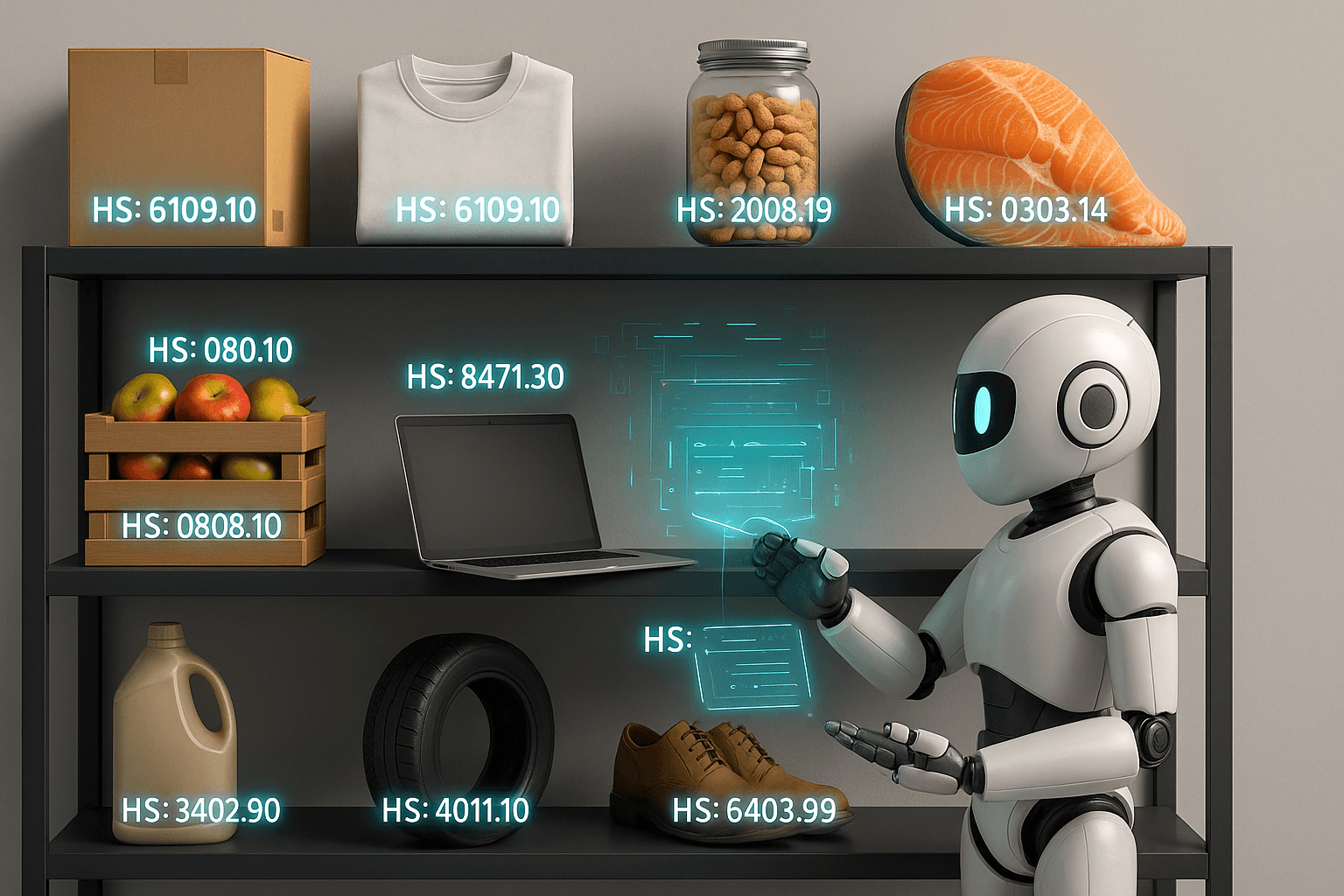
The Harmonized Commodity Description and Coding System usually shortened to the Harmonized System or HS is the global foundation for classifying traded goods.
The World Customs Organization describes the HS as a multipurpose international product nomenclature used by more than 200 countries and economies. It organizes goods into sections, chapters, headings and six-digit subheadings. The current internationally applied edition is HS 2022. (World Customs Organization)
A six-digit HS code is structured as follows:
Digits 1-2: chapter
Digits 3-4: heading
Digits 5-6: subheading
For example, a code such as 0901.21 identifies a product at the six-digit international level. Countries can add digits after that point, but they should preserve the HS structure through the first six digits.
An HS code creates a shared product classification language. It supports customs tariffs, trade statistics and regulatory controls.
However, an HS code alone does not always give you the final duty payable. The actual treatment can also depend on:
the importing country’s national tariff schedule;
the product’s country of origin;
a free-trade agreement and whether the origin rules are satisfied;
customs value and quantity;
quotas, safeguards or anti-dumping measures;
licenses, restrictions or other non-tariff measures; and
the effective date of the applicable tariff rules.
This is why classification should lead into a route-specific tariff and landed-cost check not end with a six-digit lookup.
“HTS code” commonly refers to a number in the Harmonized Tariff Schedule of the United States, or HTSUS. It is used to classify merchandise imported into the United States.
An HTSUS number normally contains 10 digits:
the first six digits follow the international HS;
digits 7-8 identify the US tariff-rate subheading; and
digits 9-10 are the statistical suffix.
The HTSUS also contains legal notes, special provisions and duty-rate columns. Classification therefore requires more than matching a product name to a line in a search result. The product description, material, function and relevant section or chapter notes can change the outcome.
The US International Trade Commission publishes and maintains the HTS, while US Customs and Border Protection is responsible for interpreting and enforcing it at importation. Because revisions can occur during the year, use the current schedule rather than a code copied from an old shipment or supplier spreadsheet. (US International Trade Commission)
Suppose a supplier gives you a six-digit HS code. That code can be a useful starting point, but it is not necessarily a complete US import classification.
The US importer must continue through the HTSUS structure to the applicable US subheading and statistical suffix. A code that works for another country’s import declaration may share the first six digits but diverge after that point.
In other words:
HS identifies the international product category. HTSUS completes the classification for entry into the United States.
Schedule B is the US classification system used for exports. It is maintained by the US Census Bureau and contains 10-digit, HS-based commodity numbers.
Schedule B numbers are used to compile US export statistics and, when required, to report goods through the Automated Export System as Electronic Export Information. The first six digits align with the HS structure, while the remaining digits reflect US export-reporting subdivisions. (US Census Bureau)
The simplest distinction is direction:
Goods entering the United States: classify under the HTSUS.
Goods leaving the United States: determine the appropriate Schedule B number for export reporting.
Do not assume that a 10-digit HTSUS number can always be copied into an export filing. Some HTSUS numbers may be permitted in place of Schedule B numbers, but the rules and exceptions must be checked. For a repeatable export process, maintain the approved Schedule B classification alongside the product record.
The Combined Nomenclature (CN) is the European Union’s eight-digit classification system. It extends the six-digit HS with two EU-specific digits.
CN codes are used for EU customs declarations and trade statistics. They help determine the conventional customs duty rate and how goods are treated for statistical or other EU policy purposes. The CN is updated annually and published in the Official Journal of the European Union. (European Commission)
The structure is:
digits 1-6: international HS subheading;
digits 7-8: EU CN subdivision.
An eight-digit CN code therefore carries more EU-specific detail than a six-digit HS code.
TARIC is the Integrated Tariff of the European Union. It builds on the eight-digit CN code with two additional digits and integrates the measures that apply under EU customs, commercial and agricultural legislation.
TARIC can surface measures such as:
tariff preferences
suspensions
tariff quotas
anti-dumping or countervailing duties
agricultural measures
import or export restrictions, and
additional document or licensing requirements.
The TARIC database is transmitted to EU member-state administrations daily so that applicable measures can be implemented consistently. (European Commission)
A basic EU hierarchy therefore looks like this:
HS6 -> CN8 -> TARIC10 -> additional TARIC or national codes where required
TARIC should not be treated as a once-a-year code list. It is an operational database of current measures, which is why an old classification record may not reveal the measures applicable to a shipment today.
Use this decision path:
Start with the HS classification, then determine the full HTSUS number. Check the current duty treatment, special program eligibility and any additional tariffs or restrictions.
Determine the Schedule B number required for export reporting. Confirm whether Electronic Export Information is required and keep the classification rationale with the shipment record.
Start with the HS6 foundation, identify the eight-digit CN code, then consult TARIC for the measures applying to the product, origin and date.
Use the applicable CN classification for the export declaration and check TARIC or national systems for relevant export measures.
Use the six-digit HS code only as the common starting point. Continue into the importing country’s national tariff nomenclature before calculating duty or preparing the final customs declaration.
Classification is not just a customs-document task. It affects the commercial decision made before the shipment is booked.
A different classification can mean a different duty rate, trade remedy or documentation requirement. If the code is wrong, the landed-cost estimate can also be wrong.
That creates a familiar failure pattern:
The product reaches the border.
Customs applies a different classification or measure.
The real margin appears only after the deal is signed.
The better workflow is to classify the product, check the route-specific duty and rules, and calculate the all-in cost before committing to the quote.
The correct code can reveal a lower rate under a free-trade agreement, but classification alone does not prove eligibility. The goods must also satisfy the agreement’s rules of origin and documentary requirements.
Misclassification can result in holds, corrections, additional duty, interest or penalties. Deliberately choosing a lower-duty code without a defensible classification basis creates substantially more risk than an ordinary data-entry mistake.
HS classifications also organize customs and trade datasets. A reliable code improves market-size analysis, shipment searches and buyer discovery. A vague or incorrect code can mix unrelated products into the same dataset or exclude the buyers you actually want to find.
Searching by a commercial product name is only the beginning. A defensible classification process should capture the attributes that the tariff nomenclature uses to distinguish one branch from another.
Record its:
Identify the likely chapter, heading and six-digit subheading. Then continue into the destination market’s national or regional extension.
Section notes, chapter notes and classification rules can exclude a product from the heading that initially looks most intuitive.
Use the current tariff schedule for the declaring jurisdiction. Where the answer remains uncertain, review relevant customs rulings or request binding guidance from the competent authority.
Keep the product facts, sources, decision path, code version and reviewer approval. A classification library is useful only when the reasoning can be reproduced after a product or tariff update.
Traditional HS directories often stop at the nomenclature: a breadcrumb, a heading description and a list of subheadings. That helps you browse, but it leaves the commercial work unfinished.
The more useful workflow connects four questions:
EximAgent is designed around that workflow. You can describe the product and route in plain language, then move from the HS classification to duty, rules and an all-in landed-cost estimate. Where authoritative tariff data exists, the answer should trace back to it; when public sources must be synthesized, that distinction should remain visible rather than presenting an invented number.
For example:
“What is the landed cost of importing olive oil from Spain to the United States?”
The useful output is not merely a code. It is the classification, the applicable route context and the cost basis needed to make the next decision.
Explore HS code classifications with EximAgent
Is an HTS code the same as an HS code?
No. The HS code is the six-digit international foundation. An HTSUS number extends that foundation for US imports, normally to 10 digits.
How many digits are in an HS code?
An international HS subheading has six digits. Countries and regions may add more digits for tariff and statistical purposes.
Can I use an HTS code for exports from the United States?
Do not assume that every HTSUS number is valid for export reporting. Schedule B is the standard US export classification. Certain HTSUS numbers may be reportable in place of Schedule B numbers, subject to the applicable rules and exceptions.
Is Schedule B only for exports?
Yes. Schedule B is the US export commodity classification. US imports are classified under the HTSUS.
What is the difference between a CN code and a TARIC code?
A CN code has eight digits and classifies goods for EU customs and statistical purposes. TARIC builds on CN with two additional digits and integrates the EU measures applicable to the goods. Additional TARIC or national codes may also be required.
Does the same product have the same code in every country?
The first six digits should generally align among countries applying the same HS edition. Digits beyond HS6 can differ because each jurisdiction creates its own subdivisions.
Does a correct HS code guarantee the correct duty rate?
No. The final rate can depend on the destination’s tariff schedule, country of origin, customs value, preference eligibility, quotas, trade remedies and the effective date.
How often do classification codes change?
The WCO revises the international HS periodically, while national and regional schedules can be updated more often. The EU updates the CN annually, and the United States can publish multiple HTS revisions in a year. Review classifications whenever the product, rules or effective tariff schedule changes.
What should I do if the classification is uncertain?
Gather complete technical product information, read the applicable legal notes and review official rulings. For material or recurring shipments, consult a qualified customs professional or seek binding classification guidance from the relevant authority.
The difference between HTS and HS codes is a difference of level and jurisdiction. HS supplies the six-digit international foundation. HTSUS and Schedule B extend it for US imports and exports, while CN and TARIC perform corresponding but not identical functions in the European Union.
The best classification process does more than find a number. It follows the code into the duty, measures and landed cost that shape the actual trade decision. Get that work done before you quote, and the code becomes a tool for protecting margin not a problem discovered at the border.
Enter your email to receive the latest trade insights, guides, and HS-code explainers from EximAgent Blog.