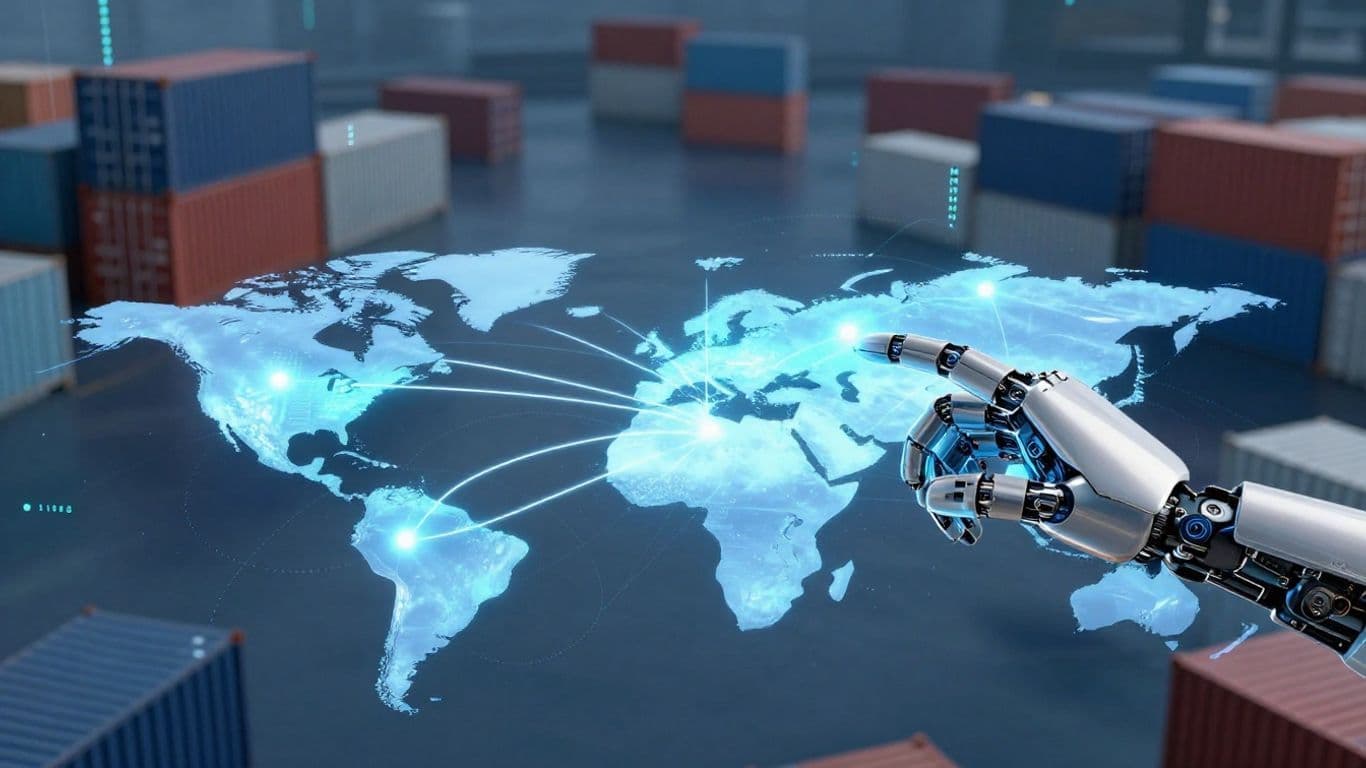
Global Trade
The AI Trade Revolution: Reshaping Global Commerce
May 28, 2026
Global Trade
Discover how AI agents automate business tasks, enhance efficiency, and optimize global trade. Learn how EximAgent changes AI-driven trade operations.
June 1, 2025By Davos Pham5 min readView as Markdown

Artificial Intelligence (AI) has evolved beyond just a tool—it is now an intelligent assistant capable of making decisions, learning, and executing tasks autonomously. One of the most powerful applications of AI today is the AI agent—a self-operating program that interacts with its environment, adapts to changes, and performs tasks without continuous human intervention.
From customer service chatbots to automated trading systems and smart personal assistants, AI agents are reshaping industries by enhancing efficiency, decision-making, and scalability. In this article, we will break down what an AI agent is, how it works, its different types, and how businesses can leverage AI-driven automation to stay ahead in the digital age.
An AI agent is an autonomous program that can observe its surroundings, analyze information, make decisions, and execute actions to achieve a goal. Unlike traditional software that operates based on predefined rules, an AI agent continuously learns from data and adapts to new inputs.
A good example of an AI agent is a self-driving car—it processes real-time data from its sensors, identifies road conditions, and adjusts its speed and direction based on the environment. Similarly, AI agents in business settings help automate processes like customer support, marketing, sales, and logistics, reducing manual work and improving decision-making.
AI agents function through a four-step process:
AI agents mimic human intelligence but operate at much higher speeds, analyzing vast amounts of information in real time.

AI agents are classified based on their complexity, autonomy, and ability to learn. The five main types are:
These agents react to specific conditions without considering past experiences. Example: Thermostats adjust temperature based on pre-set rules.
These AI agents store and analyze past information to improve decision-making. Example: AI-powered chatbots that remember previous interactions.
Instead of just reacting, these agents work towards a specific goal and adjust their actions accordingly. Example: Self-driving cars, which calculate the best route based on current traffic.
These agents weigh multiple factors to choose the most optimal decision. Example: AI trading bots, which analyze stock trends and risks to maximize profit.
The most advanced type, learning agents continuously improve through machine learning algorithms. Example: Google’s AlphaGo, which learned from playing thousands of Go games and eventually defeated human champions.
AI agents are revolutionizing businesses by automating complex processes, reducing costs, and enhancing efficiency. Some of the most common applications include:
AI-powered chatbots and virtual assistants handle customer queries, troubleshoot issues, and personalize user experiences—reducing response time and improving customer satisfaction.

Example: Companies like Amazon and Apple use AI-driven assistants like Alexa and Siri to handle voice commands, schedule appointments, and process orders.
AI can analyze consumer behavior, predict trends, and automate targeted advertising campaigns, increasing engagement and revenue.
Example: AI-powered email marketing tools personalize customer messages based on purchase history and interests, leading to higher conversion rates.
Banks and investment firms use AI agents to detect fraud, optimize financial transactions, and automate trading decisions based on market trends.
Example: AI-driven trading platforms like Robinhood and E*TRADE use AI to execute high-frequency trades at optimal times.
AI-driven diagnostic tools can analyze medical data, detect diseases early, and suggest treatment plans.
Example: IBM’s Watson Health AI processes millions of medical reports to assist doctors in diagnosing complex diseases.
AI-powered logistics systems predict supply chain disruptions, optimize delivery routes, and reduce waste.
Example: UPS and FedEx use AI to optimize delivery schedules, reducing fuel costs and improving efficiency.
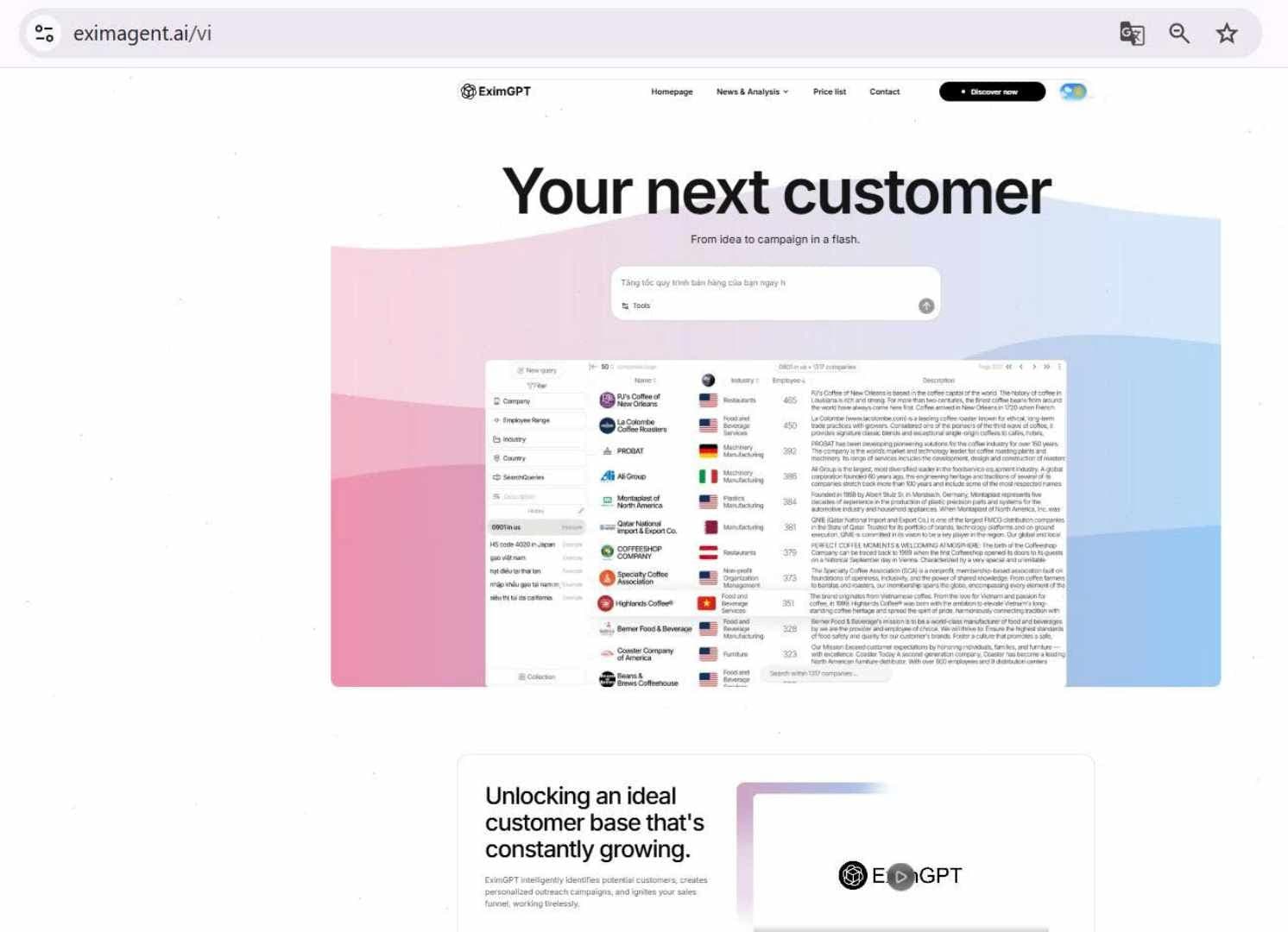
EximAgent functions as an intelligent AI agent designed specifically for global trade, helping businesses streamline export-import operations, automate lead generation, and optimize trade compliance. Here’s how EximAgent operates as an AI-powered trade assistant:
EximAgent analyzes market trends, trade databases, and buyer behavior to identify high-potential leads. Instead of relying on manual outreach, businesses can use AI-driven sales automation to connect with the right buyers instantly.
Example: Instead of spending weeks researching trade opportunities, exporters can use EximAgent’s AI-powered sourcing engine to find verified importers in seconds.
EximAgent monitors international trade trends, tariff changes, and regulatory updates, providing businesses with real-time insights to make informed export-import decisions.
Example: If a country suddenly increases tariffs on a specific product, EximAgent alerts businesses and suggests alternative trade routes or suppliers.
EximAgent automates personalized email outreach to potential buyers and suppliers, ensuring higher response rates and conversion rates.
Example: Instead of sending generic trade inquiries, EximAgent generates data-driven, customized emails tailored to each recipient’s interests.
AI agents represent the next phase of digital transformation, bringing automation, intelligence, and efficiency to businesses across industries. Whether in customer service, sales, finance, healthcare, or logistics, AI agents enhance productivity, reduce costs, and create new opportunities for innovation.
EximAgent stands at the forefront of this revolution, empowering businesses with AI-driven trade automation, intelligent compliance tools, and predictive market insights. By integrating AI agents like EximAgent into trade operations, companies can reduce costs, optimize efficiency, and scale their business globally.
📢 Want to integrate AI into your trade operations? Start leveraging EximAgent today!
Enter your email to receive the latest trade insights, guides, and HS-code explainers from EximAgent Blog.