Technology
What Is a Bill of Lading and Why It Is Important?
Jan 16, 2026
Global Trade
What bill of lading data contains, what it reveals about who is really buying — recurrence, volume trend and supplier switching — and the coverage limits most providers leave out.
August 11, 2026By Davos Pham9 min readView as Markdown
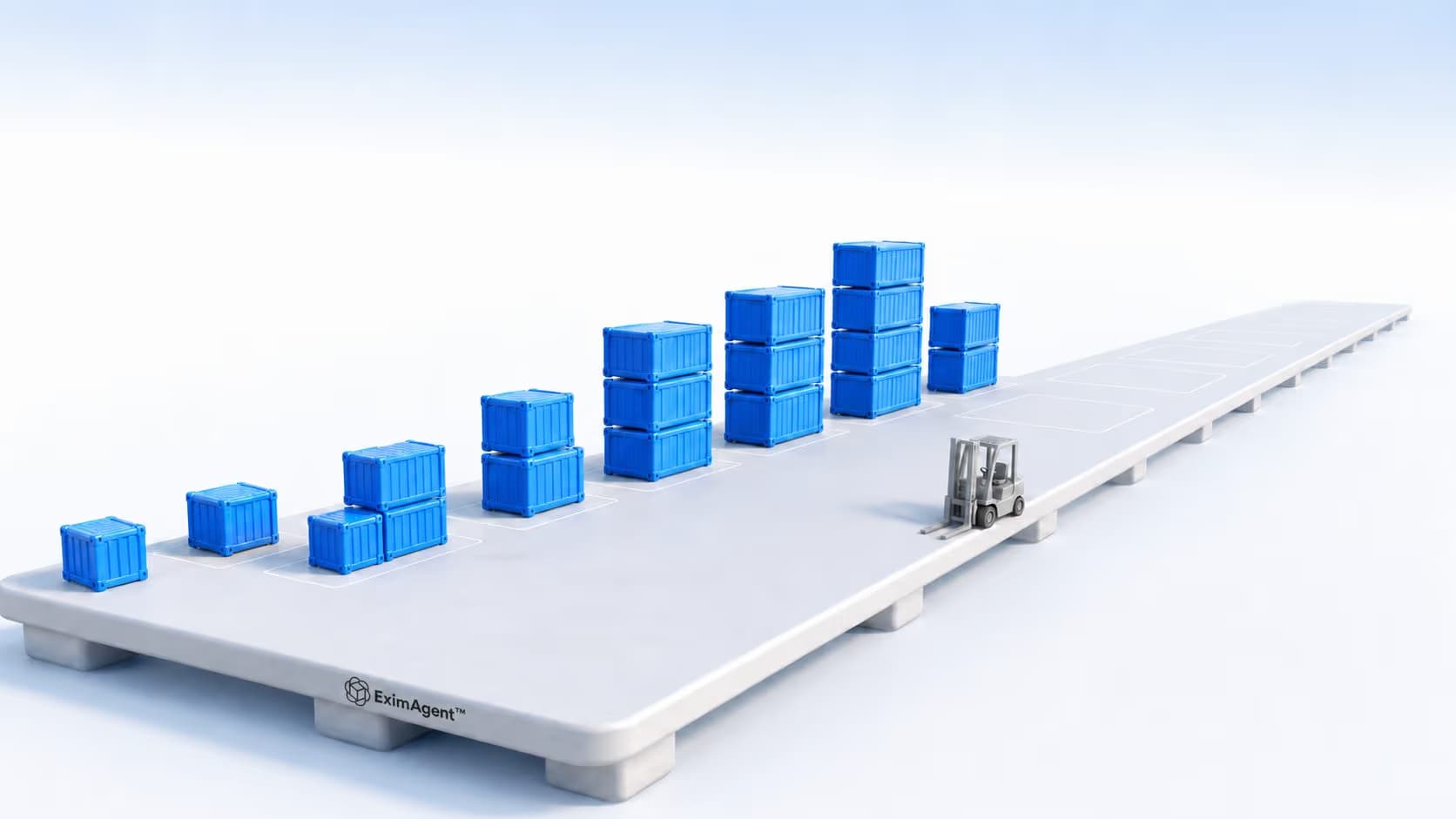
Every container that crosses a border leaves a paper trail. Somebody declares what is inside it, who shipped it, who is receiving it and where it is going — and in a number of countries, that declaration becomes public record.
That record is the reason bill of lading data exists as a dataset at all. It is one of the very few signals in B2B that is not written by a marketer, not self-reported on a company website, and not inferred by a model. A buyer bought something, physically, and a customs authority wrote it down.
The interesting question is not what the document is. It is what a few million of those documents, stacked up and made searchable, actually tell you about who is buying — and, just as importantly, where they stop telling you anything.
A bill of lading is a shipping document. It is the carrier's receipt for the cargo, the contract of carriage, and — depending on the type — a document of title. If you want that explained properly, we have already written it up in what a bill of lading is and why it matters.
Bill of lading data is a different thing. It is what you get when those documents stop being individual pieces of paper and become rows: millions of filings, parsed into fields, deduplicated, matched to companies, and searchable by product, company, country and date.
The distinction matters because it changes what the thing is for. One bill of lading tells you about one shipment. A few hundred thousand of them tell you which companies in a market buy your product, how often, from whom, and whether they are growing or going quiet.
Most articles about this dataset describe it in the abstract. It is more useful to look at a single record and go field by field, because every field answers a different commercial question.
Here is the shape of a record as it appears once it has been structured for buyer research — this is an illustrative example, not a specific company:
Those last three fields are the ones most trade-data products leave off, and they are the ones that decide whether you can defend a recommendation to your sales team.
Read one row and you learn a fact. Read a company's rows in sequence and you learn behaviour.
Recurrence separates buyers from tourists. Nineteen shipments across twelve active months is a company with a standing requirement and a supplier it keeps using. Two shipments eighteen months apart is a company that tried something once. Those two profiles deserve completely different outreach, and nothing on either company's website will tell you which one you are looking at.
Volume trend shows you where the pressure is. A buyer whose monthly volume has doubled over a year is scaling and probably straining their current supply. A buyer trending down may be losing their own end customer — or moving the business to someone else.
Supplier concentration tells you how hard the door is. A buyer sourcing from a single supplier for four years is a difficult conversation. A buyer who has used five suppliers in two years has already demonstrated they will switch.
Silence is a signal too. A buyer with a steady rhythm who has not imported in five months is either in trouble, between contracts, or has quietly moved to a new supplier. That is a reason to call, and a reason to lead with a question rather than a pitch.
This is the same logic behind analysing buyer intent from shipment data: a purchase that already happened is a better predictor of the next purchase than any behavioural score built from web visits.
This section exists because almost nobody writing about this dataset will tell you where it fails, and you will find out anyway — usually in front of a prospect.
Coverage is not global, and it never has been. Some countries publish detailed manifest data. Many publish nothing at all. Any provider implying complete worldwide coverage is describing an ambition. The honest version is per-lane: this corridor is well covered, that one is thin, and here is which one you are looking at.
Not every shipment is visible even where coverage is good. In the US, importers can request confidentiality for their manifest data, and shipments moving through channels that do not produce a public filing simply are not in the dataset. A company's absence is not proof they do not import.
A master bill can name the wrong party. When a freight forwarder consolidates cargo, the master bill may show the forwarder rather than the company that actually bought the goods. The house bill underneath it carries the real consignee. Read only the master level and you will build a prospect list of logistics companies.
Price and quantity are often unreliable or absent. Declared values are filed for customs purposes, not for your margin analysis. Treat them as directional at best.
A contact is not a relationship. A name and an address on a filing is an operations or compliance contact far more often than it is a buyer. That is why the honest label on that field is extracted, and why the next step is verification rather than an email.
None of this makes the dataset weak. It makes it evidence — and evidence you know the limits of is worth more than a confident number you cannot trace.
If you are comparing providers, the questions that actually separate them are narrow:
That last point is the difference between a data subscription and something that changes your week. We have written before about why static customs databases hold exporters back: the constraint is rarely the records. It is the human hours between a row and a conversation.
Here is the loop most teams run. Search the database. Filter to a product and a country. Read rows until the names blur. Export a CSV. Move it to another tool to find contacts. Verify some of them. Write the emails. Do the judgment yourself, at every step.
Now look at what actually changed in that loop: nothing about the data. The records were fine. The cost was the six manual handoffs around them.
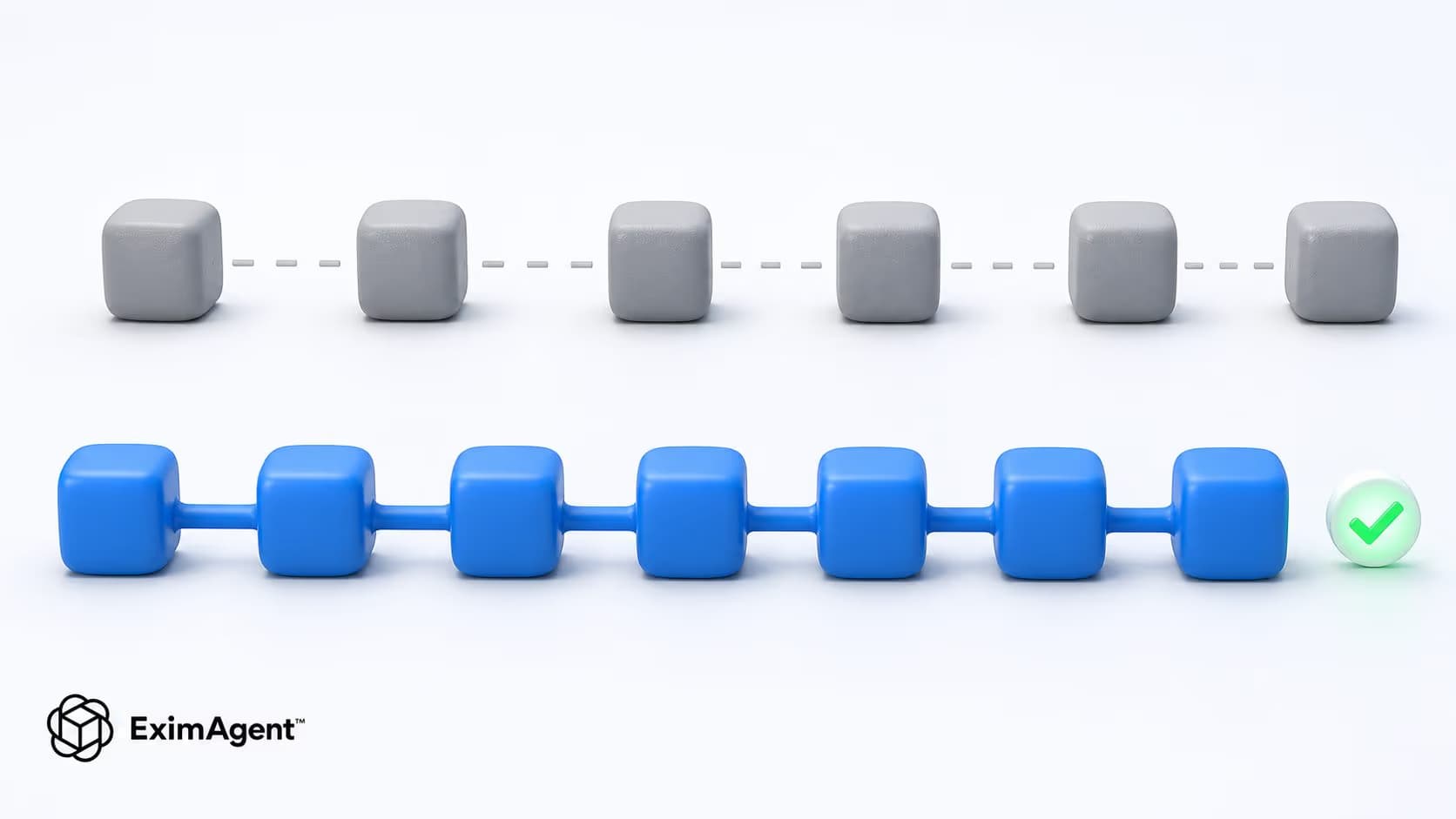
The alternative is to structure the same customs records so an agent can work through them — investigate a product and market, rank the importers it finds, show the evidence behind each one, save the ones you keep, enrich the contacts and prepare the outreach — while you approve each step. Same class of data as every incumbent. Far less of your week spent moving it between tabs. That is also the practical version of finding B2B trade leads with a data-driven method, and the reason AI agents are showing up in small exporters' workflows before they show up anywhere else.
For scale, the corpus behind this approach covers 276M+ customs shipment records across 248 countries and more than 6,000 HS product codes — and every result still shows its source, its confidence and its coverage.
Through the customs authorities that publish it, or through a provider that collects, cleans and structures those filings for you. Raw manifest data is difficult to work with directly: company names are inconsistent, cargo descriptions are free text, and the same importer appears under six spellings.
In some countries, yes — US import manifest data is a well-known example. In many others it is not published at all. This is exactly why coverage should be stated per lane rather than as a single global claim.
Typically the shipper and consignee, a cargo description, an HS code, weights and container details, ports of loading and discharge, the vessel and the date. Structured datasets add derived fields on top — shipment counts, active months, recency and confidence labels.
Some of it, in raw form, with effort. What free sources will not give you is deduplicated company matching, recency you can trust, or a way to get from a row to a verified contact — which is where essentially all of the time goes.
It varies by source and by lane, and it is the question worth asking hardest during a trial. Ask for the date of the most recent shipment in the exact corridor you sell into, not the size of the overall archive.
Bill of lading data is not interesting because it is big. It is interesting because it is the one part of a buyer's behaviour that somebody else wrote down — and because, read carefully, it tells you who is buying, how often, from whom, and when that pattern changed.
The rest of the work is getting from that record to a conversation without losing a week. See what agent-ready trade data looks like — with sources, confidence and coverage on every result, and your approval at every step.
Enter your email to receive the latest trade insights, guides, and HS-code explainers from EximAgent Blog.

-1456x816.png&w=3840&q=75)