Global Trade
The AI Trade Revolution: Reshaping Global Commerce
May 28, 2026
Global Trade
Most recently, a high-tech intensive shrimp farming model in Camagüey province (Cuba) has become a highlight of their bilateral collaboration in...
May 6, 2025By Davos Pham3 min readView as Markdown
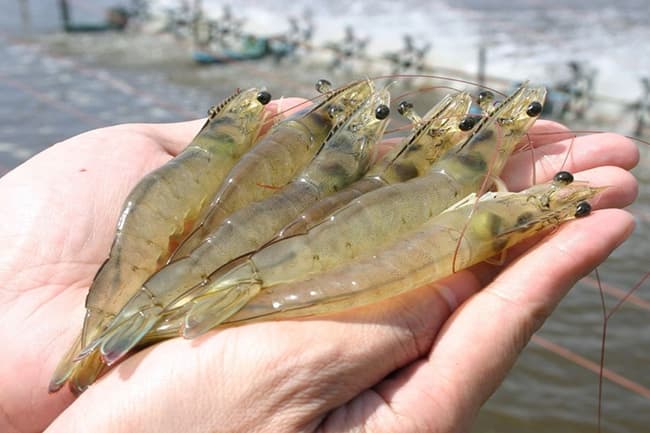
Despite being half a world apart, Vietnam and Cuba continue to deepen their traditional friendship through practical cooperation projects. Most recently, a high-tech intensive shrimp farming model in Camagüey province (Cuba) has become a highlight of their bilateral collaboration in agriculture and aquaculture.
Thanks to the support of an experienced team of Vietnamese experts, Cuba is gradually adopting modern and sustainable production processes, creating new opportunities for its aquaculture sector amid ongoing challenges such as trade embargoes and climate change.
The first farming cycle of the Vietnam–Cuba shrimp farming project began in 2024, featuring five pilot ponds in Santa Cruz del Sur, Camagüey. In just 121 days, the project harvested 20 tons of shrimp — achieving a yield of 4 tons per hectare — a remarkable result given Cuba’s current conditions.
This early success was the result of close collaboration between four Vietnamese experts and Cuban technicians. The Vietnamese team not only transferred knowledge but also actively participated in operations and process adjustments, demonstrating a “live and work together” spirit of responsibility and partnership.
A key factor behind the project’s success is the application of Vietnam’s modern intensive farming technology, which has already been successfully exported to many countries. The complete system deployed in Cuba includes:
By combining advanced technology with Vietnam’s hands-on experience, Cuba is shortening the time required to master new methods and is seeing clear economic benefits after just one farming cycle.
Encouraged by the pilot model’s potential, both countries are working to expand the project to a 10-hectare site in Camagüey. The second production cycle began in late April 2025 on the first 5 hectares.
Mr. Miguel Antonio Manso Díaz, Head of Production at Cultisur, shared: “We’ve prepared 10 out of 30 ponds, stocking at a density of 100 shrimp per square meter, with an expected yield of 900–1,000 kg per hectare.”
If the second cycle performs as well as the first, the total output could reach 45 tons of shrimp in the second half of 2025. This would significantly strengthen Cuba’s domestic seafood supply and lay the groundwork for future exports.
The high-tech shrimp farming model supported by Vietnam is now being extended beyond Camagüey to key provinces such as Villa Clara and Pinar del Río — regions with great aquaculture potential but lacking modern farming systems and trained personnel.
This expansion is expected to boost seafood production, drive local infrastructure upgrades, and encourage process innovation. It also aligns with Cuba’s national goal of developing high-tech agriculture.
Beyond technical training, the Vietnam–Cuba project delivers a full-package solution across the shrimp farming value chain, including:
Hands-on training and overnight collaboration with Cuban engineers have created strong bonds and exceeded expectations — a testament to sustainable and human-centered cooperation.
This project's success brings more than just production gains — it opens up significant opportunities for investment, trade, and export:
Enter your email to receive the latest trade insights, guides, and HS-code explainers from EximAgent Blog.