Global Trade
The AI Trade Revolution: Reshaping Global Commerce
May 28, 2026
Global Trade
EximNews: A major barrier for Businesses looking to tap into these promising niche markets but lacking sufficient language skills and appropriate...
June 1, 2025By Davos Pham4 min readView as Markdown
While English remains the lingua franca of global trade, many high-potential markets do not use English as their primary language — such as Japan, China, South Korea, and Middle Eastern countries. This presents a major barrier for Vietnamese businesses looking to tap into these promising niche markets but lacking sufficient language skills and appropriate tools.
So how can we overcome this barrier and turn a "disadvantage" into a competitive advantage? This article will break down the challenges and introduce a solution from EximAgent — a specialized AI platform for the import-export sector.

Many businesses mistakenly believe that using tools like Google Translate is enough to overcome language barriers. However, the reality of B2B business is far more complex. Misunderstanding industry terminology, misphrasing contracts, or using the wrong tone in an email can lead to failed deals or leave a poor impression on potential partners.
For instance, when approaching the Japanese market, Vietnamese businesses may struggle to find importers if they don’t use the specific industry-related Japanese keyword (e.g., “卸売業者” instead of “importer”). Similarly, those entering the Middle East market often face the challenge that most business information is only available in Arabic.
International trade communication involves not just language but also cultural nuances. A product introduction email written in grammatically correct Japanese may still be ignored if it fails to meet local standards of politeness. Business language, forms of address, quotation formatting, or even the timing of the email — all must be localized to suit each specific country.

One of the most obvious consequences is missing out on potential customers due to an inability to search using local-language keywords. Many Vietnamese businesses have overlooked major importers in Japan or Korea simply because they couldn’t input the correct search terms in the local language.
Even with access to information, if a business cannot read foreign-language websites or trade data, there’s a high chance of misinterpreting customer needs or import regulations. This could result in sending incorrect quotations, choosing the wrong products, or failing to meet standards — leading to canceled deals.
Sending emails in English to partners who don’t use the language may be ignored right from the start. Worse, using inaccurate auto-translation tools to draft emails in Japanese or Chinese can lead to confusing or even offensive content. Meanwhile, competitors from countries like Korea or Thailand already know how to personalize content in native languages and cultures — leaving Vietnamese businesses behind.
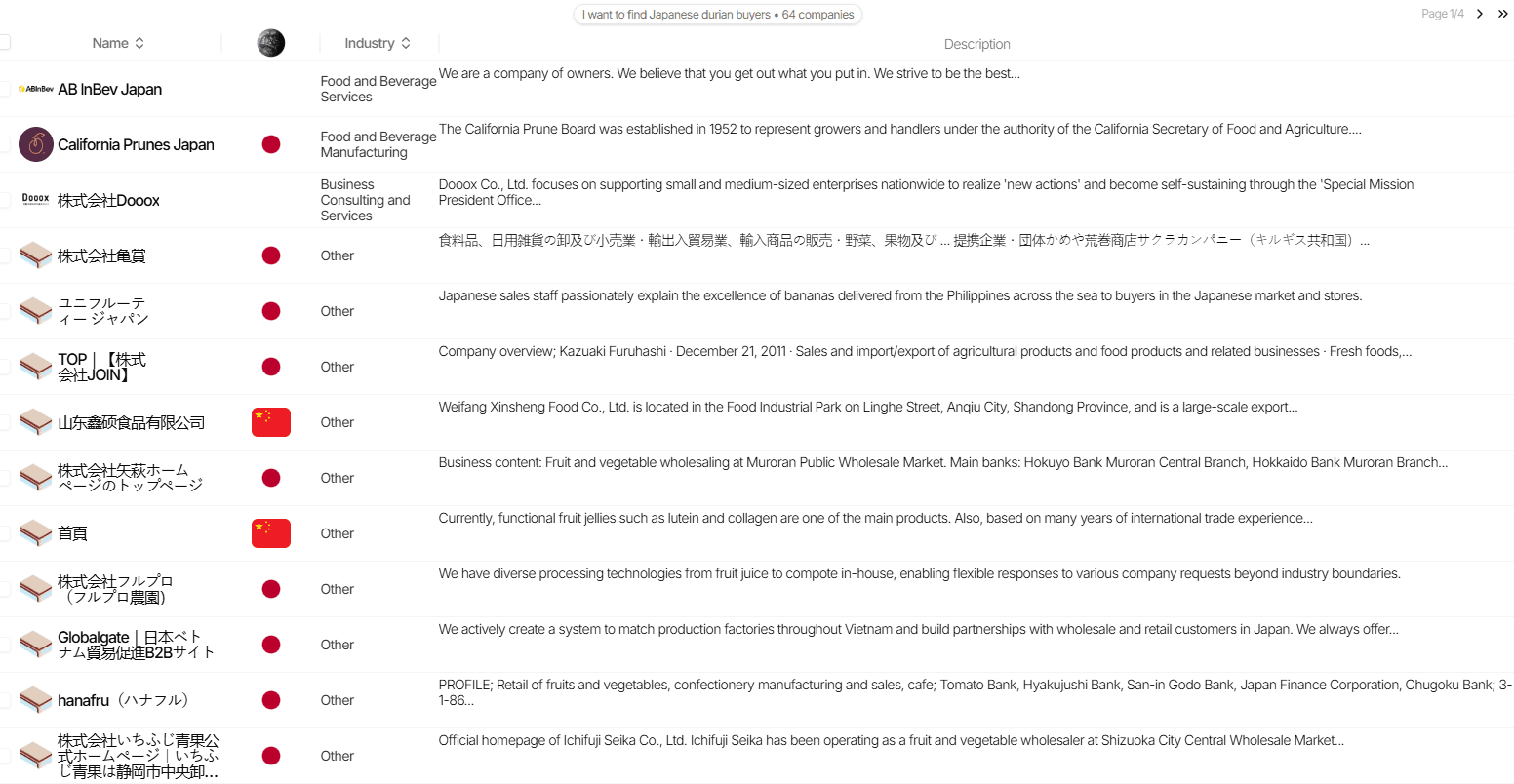
With a global import-export database, EximAgent allows you to search for potential buyers by region (country, continent, developed or niche markets). This is a key advantage when approaching non-English-speaking areas, helping you target the right audience without the need to navigate multiple platforms manually.
Just select a market like Japan, the Middle East, or Africa, and EximAgent will suggest potential importers for your products — shortening the data filtering process and increasing accuracy.
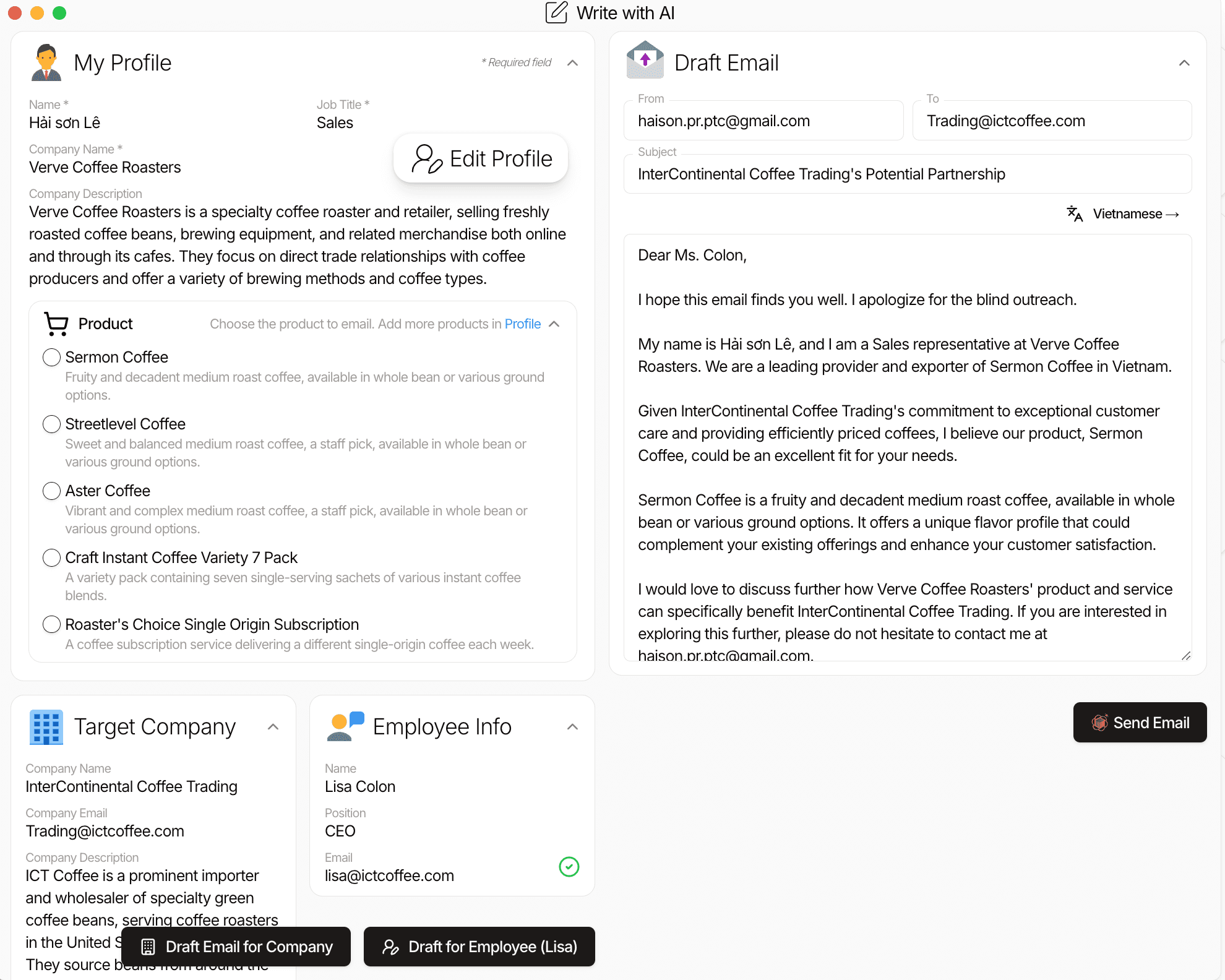
A standout feature of EximAgent is its ability to automatically write sales emails in local languages. Just enter the product name and choose your target market — the system will generate a professionally written email in Japanese, Chinese, Korean, or Arabic, using correct business terminology, cultural structures, and proper formatting.
For example, instead of using the word “cheap” in an email to the Japanese market, the system will suggest “reasonable price” — a more culturally respectful expression in Japan’s business context.
Markets like the Middle East, Japan, or Russia are not top priorities for many Vietnamese businesses due to language barriers. But that presents an opportunity for pioneers. With a tool like EximAgent to break down those barriers, you can enter a space with fewer competitors — increasing your deal-closing rate while reducing competitive pressure.
An email written in a native language, using correct business standards and showing cultural understanding, leaves a strong impression on importers. They feel respected and well-treated — making them more likely to trust your Vietnamese business over others who just send generic emails in English.
Previously, accessing the Japanese market required hiring interpreters or local consultants — which could be costly. Now, with a single platform like EximAgent, every step from research to analysis to initial communication can be automated — helping you save time and cut costs by up to 70%.
Enter your email to receive the latest trade insights, guides, and HS-code explainers from EximAgent Blog.