Global Trade
The AI Trade Revolution: Reshaping Global Commerce
May 28, 2026
Global Trade
You might have a great product and a clear export plan, but if you don't know how your target market talks about your product, how will you find...
June 1, 2025By Davos Pham3 min readView as Markdown

For many small and medium-sized businesses in English-speaking countries, entering global markets isn’t just about product quality or competitive pricing—it’s about finding the right buyers. And surprisingly, one of the biggest obstacles is language.
You might have a great product and a clear export plan, but if you don't know how your target market talks about your product, how will you find the companies that actually want to buy it?
It may seem minor, but this is a real bottleneck in global B2B sales—and a major reason businesses miss out on key opportunities.
So, can you export without speaking the local language?
Yes—if you understand how trade language works and have the right tools.
Let’s say you're a U.S. wood exporter looking for buyers in China. You Google:
“timber importers in China” or “acacia wood buyers China.”
What you’ll likely get:
Why?
Because Chinese businesses don’t describe themselves in English. They use terms like “进口桉木” (imported acacia wood) or “木材进口商” (timber importer) on their websites and in customs filings. If you're only searching in English, you’re missing out on what’s actually happening in their language—and, by extension, their market.
Same goes for Japan, South Korea, or the UAE. If you're a coffee exporter searching “coffee importers in Japan,” you may never find companies who actually list themselves under “コーヒー 輸入会社.”
This is a common blind spot in global export: expecting local companies to speak your language.
Every country has its own way of talking about trade—commercial terms, contract language, import documentation, and even search behavior.
Here are some common mismatches between intent (in English) and the actual trade keywords used locally:
Search Intent (in English) | Real Keyword (Local Language) | Language |
|---|---|---|
Pepper importers in South Korea | 후추 수입업체 | Korean |
Date buyers in the UAE | موردي التمر الإمارات | Arabic |
Cashew nut importers in Japan | カシューナッツ 輸入会社 | Japanese |
Rice buyers in China | 大米 进口商 | Chinese |
You might think: “I’ll just run it through Google Translate.”
But general translators are not trained in trade-specific terminology. They often translate literally or use casual language that doesn’t reflect how companies describe themselves professionally. As a result, you’ll miss key opportunities—or worse, find the wrong type of contact (e.g., retailers instead of importers).
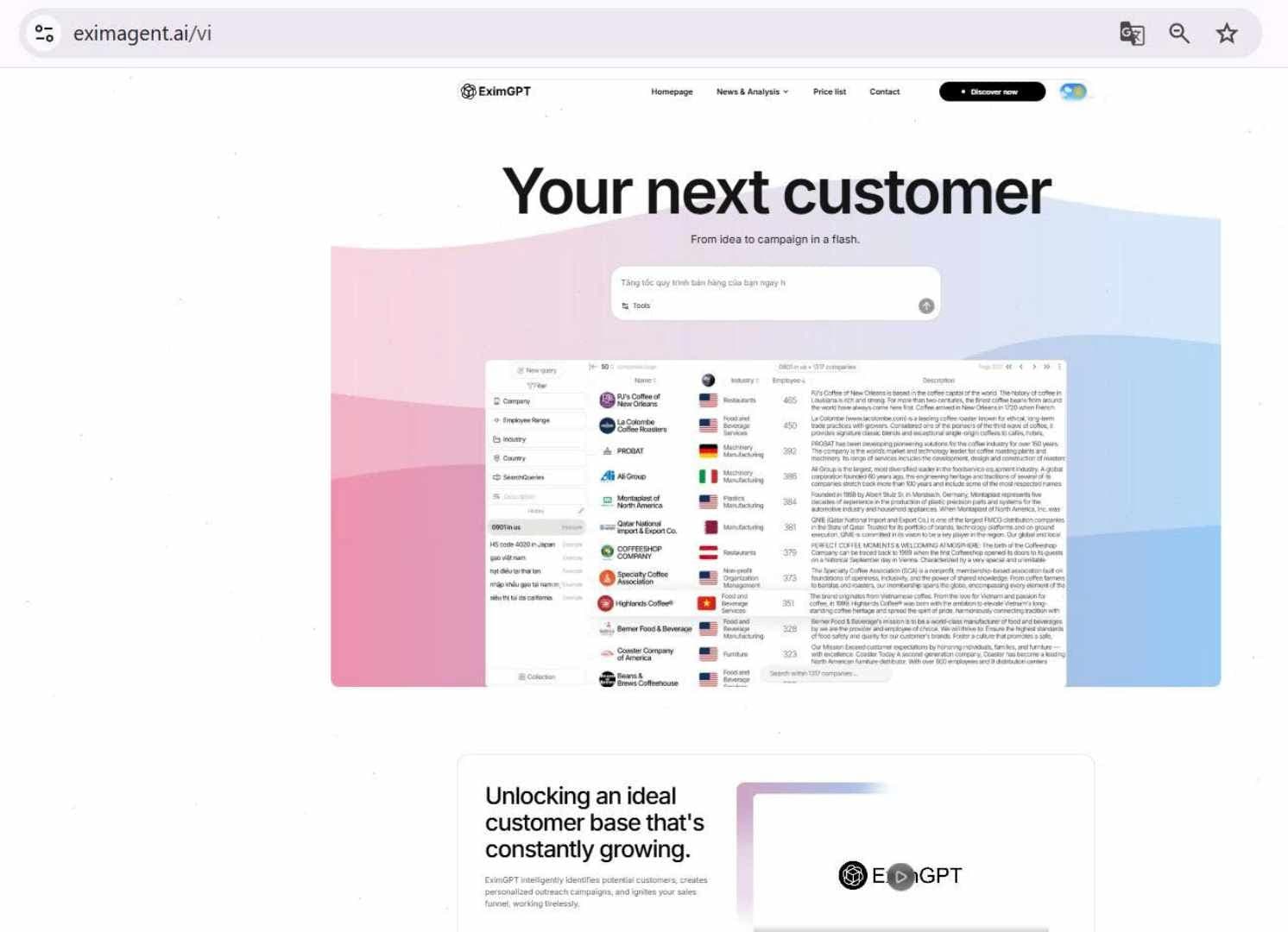
EximAgent is an AI-powered export intelligence platform designed to eliminate language barriers in B2B export.
Just enter a simple search in English, such as:

The system translates your intent into the correct local-language trade keyword (used in customs filings and commercial directories), then queries verified import data. The result?
A clean, structured list of real companies that have imported the product you’re offering—shown in English, so you can quickly analyze and take action.
No guesswork. No noisy data. No need to know Chinese, Arabic, Korean, or Japanese.

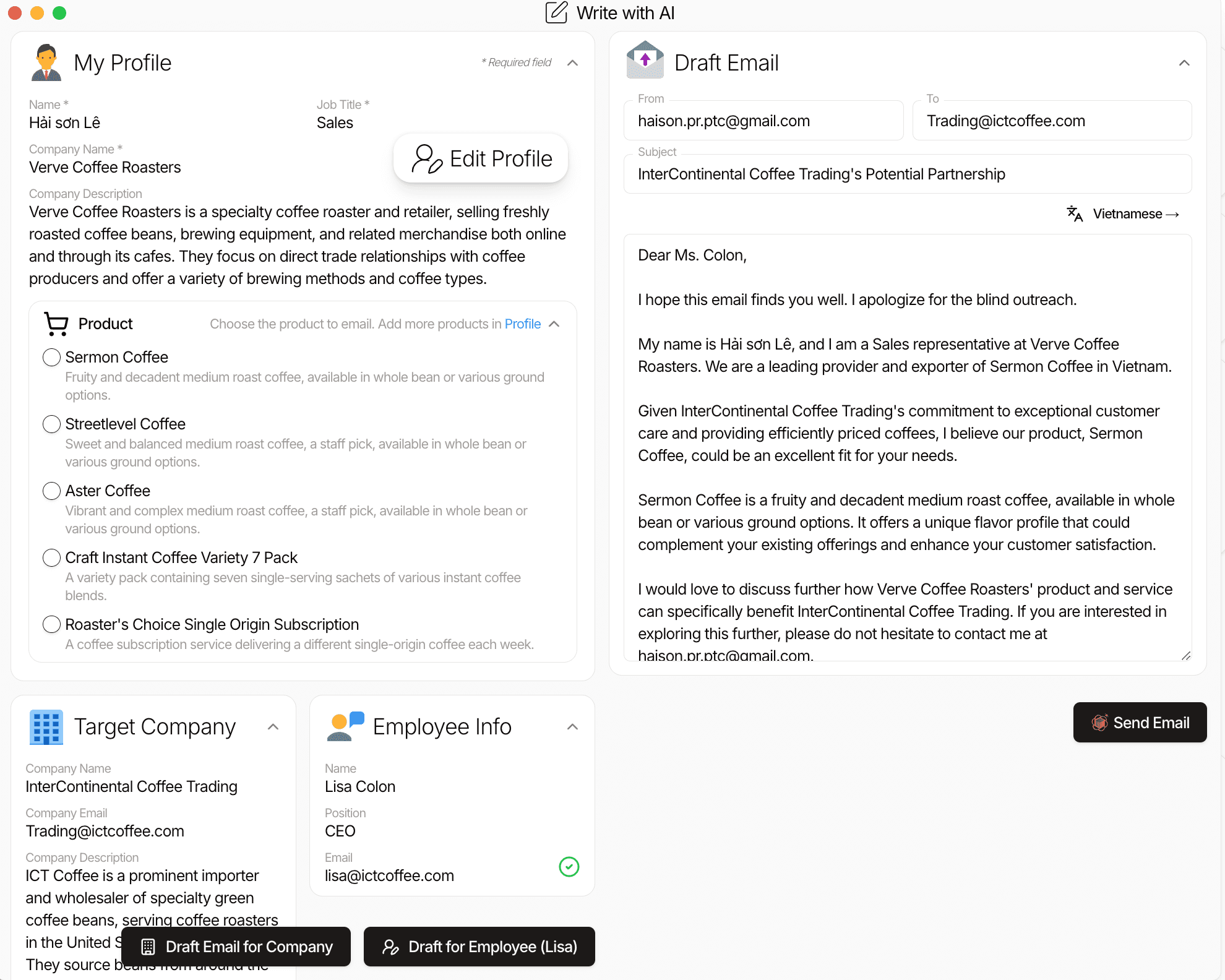
After finding buyers, the next step is outreach. But writing effective, respectful B2B emails across cultures isn’t always straightforward.
EximAgent also helps you craft personalized email suggestions that:
You may not speak the local language—but your email will sound like you understand how to do business in their culture.
Language has long been one of the biggest limitations for small exporters. But with EximAgent, you can confidently access trade data across markets—no matter what language your buyers speak.
Instead of hiring expensive translators or relying on inaccurate online searches, use AI to go straight to verified results in seconds.
🌍 Start your free trial today at: https://www.EximAgent.com/exim-lead
Enter your email to receive the latest trade insights, guides, and HS-code explainers from EximAgent Blog.