Artificial Intelligence
Sales Artificial Intelligence: Boost 2026 Revenue
May 25, 2026
Artificial Intelligence
Discover AI strategies to find leads for your small business. This playbook covers AI tools, automation, and data-driven insights for growth.
April 9, 2026By Davos Pham19 min readView as Markdown

Finding leads for a small business can feel like shouting into the void. You try all the old tricks, cold calls, flyers, maybe even a desperate email or two, but nothing seems to stick. These days, people have tuned out the noise. They want answers, not interruptions. That’s where using
AI comes in. With the right tools and a fresh approach, you can find leads who actually want to talk to you, not run the other way. This playbook is about making your life easier, not harder, and helping your business grow with less stress and more results.

Remember the days of cold calling lists and mass mailers? Yeah, most of us do, and frankly, they just don't cut it anymore. The way people find and buy things has changed big time. Customers are way more informed now, doing their own digging online before they even think about talking to a business. This means those old, interruptive tactics are not only less effective, they're also a huge drain on resources for small businesses.
For a long time, businesses just blasted their message out everywhere, hoping someone would listen. Think of it like shouting into a crowded room – you might get lucky, but mostly you're just making noise. This approach, often called outbound marketing, is expensive and inefficient.
In fact, research shows that outbound leads can cost up to 39% more than inbound leads (Source: HubSpot, 2024).
You're spending time and money trying to grab attention, but you're not really connecting with people who are actually interested. It's a quick way to burn through your budget without bringing in the kind of leads that actually help you grow.
The smart move now is to flip that script. Instead of pushing your message out, you pull customers in by being genuinely helpful. This is inbound marketing. It's all about creating content like blog posts, guides, or social media tips, that answers people's questions and solves their problems.
Recent data indicates that 80% of B2B buyers prefer to get company information from a series of articles rather than an advertisement (Source: Demand Gen Report, 2024).
When you consistently provide useful information, you build trust and show that you know your stuff. This positions you as an authority, and when people are ready to buy, they'll think of you first. It creates a steady stream of leads who are already interested in what you offer.
This shift means you're not bothering people; you're becoming a helpful answer to their questions. It's about being there when they need you, not interrupting them when they don't.
This is where Artificial Intelligence comes in. AI tools can automate a lot of the heavy lifting involved in inbound marketing. They can help you figure out what content to create, optimize it so people find it online, and even personalize messages to different potential customers. AI can also help manage interactions, like using chatbots to answer questions instantly. It's about working smarter, not just harder, to connect with the right people at the right time. This makes lead generation more efficient and effective for small businesses trying to compete.
Okay, so you've got some ideas about what you want to achieve with lead generation. That's a start. But before you even think about creating content or running ads, you really need to nail down who you're trying to reach. Trying to sell to everyone is like trying to catch fish with a net
full of holes – you'll catch a lot of junk and miss the good stuff. Knowing your ideal customer is the bedrock of smart lead generation. It's not just about age or location; it's about understanding their world.
Let's be real, vague goals like "get more leads" don't help anyone. They're just wishful thinking. You need goals that are Specific, Measurable, Achievable, Relevant, and Time-bound. This framework turns fuzzy ideas into a concrete plan. Think about it: instead of "increase website traffic," a SMART goal might be "get 50 qualified leads from social media within the next three months." See how much clearer that is? It tells you exactly what success looks like and when you
need to hit it.
Here's a quick breakdown:
Setting these kinds of goals forces you to think backward. If you need 50 leads, and your landing page converts at 5%, you know you need about 1,000 visitors. Then you can figure out where those visitors should come from – maybe 600 from Instagram, 300 from email, and 100 from a blog post. It’s about building a clear path.
Once you know who you're talking to and what you want to achieve, you need to understand how they move from being a stranger to a customer. This is the customer journey. AI can really help here by looking at data you might miss. It can spot patterns in how people interact with your website, what content they look at, and where they drop off. This isn't just about tracking clicks; it's about understanding their intent.
Think about the different stages:
AI tools can help you figure out what kind of content works best at each stage. For awareness, maybe it's a helpful blog post. For consideration, perhaps a downloadable guide or a webinar. For decision, a case study or a free trial. Understanding the customer journey isn't just an academic exercise. It directly impacts how you spend your marketing budget and your time. By aligning your efforts with where your customer is in their process, you stop annoying people and start being genuinely helpful. This makes them more likely to trust you and eventually buy from you.
What keeps your ideal customer up at night? What problems are they desperately trying to solve? This is where you can really connect. If you're selling accounting software, their pain point might be spending too much time on manual data entry or worrying about tax compliance. If you sell ergonomic office chairs, it could be back pain or poor posture from long hours at a desk.
AI can help analyze customer feedback, social media conversations, and support tickets to pinpoint these common frustrations. Once you know their pain points, you can create content and offers that directly address them. This is way more effective than just talking about your product's
features. You're showing them you understand their struggles and have a solution.
For example, if a common pain point is "difficulty managing project deadlines," you could create:
By focusing on their problems, you attract people who are actively looking for what you offer, making your lead generation efforts much more efficient.
So, you've got a great product or service, but how do people actually find you when they're looking online? That's where search engine optimization, or SEO, comes in. For a long time, SEO felt like a dark art, a bunch of rules and tricks to get Google to notice you. But now, AI is changing the game, making it way more straightforward and, honestly, more effective.
Think about it: when someone types a question into a search engine, they're usually looking for an answer or a solution. AI can help you figure out exactly what those questions are and then create content that directly answers them. It's about being there at the exact moment someone needs what you offer. This means your content isn't just out there; it's actively being sought out.
AI tools can analyze search trends, identify keywords your potential customers are actually using, and even predict what they'll be searching for next. This isn't just about stuffing keywords into a blog post, either. It's about understanding the intent behind the search. Are they looking to learn, compare, or buy? AI helps you tailor your content to match that intent, making it more likely to rank higher and attract the right kind of visitor. It’s about making your website a go-to resource for the problems your audience is trying to solve. You can start exploring how AI can help with your search rankings by looking into AI-powered SEO tools

Creating good content takes time. A lot of time. You need to research, write, design graphics, and then figure out where to post it. For small businesses, this is often a huge bottleneck. You're busy running the actual business, right? This is where AI automation really shines. Imagine having a system that can help you generate different types of content consistently, without you having to be involved in every single step. We're talking about things like blog posts, social media updates, and even visual content.
AI can help in a few ways here. It can brainstorm topic ideas based on what's trending or what your competitors are doing. It can even draft initial versions of articles or social media captions. For visual content, which is super important for grabbing attention, AI tools can create graphics, infographics, and even short videos. This doesn't mean the AI writes everything perfectly on its own – you'll still want to review and add your unique voice. But it drastically cuts down the time spent on the grunt work. This frees you up to focus on strategy and connecting with leads.
Here’s a look at how AI can speed things up:
The goal isn't to replace human creativity but to augment it. By automating the repetitive tasks, AI allows small business owners to produce more high-quality content more consistently, which is key for attracting and keeping attention online.
People are bombarded with marketing messages every day. To cut through the noise, your content needs to feel relevant and personal to each individual. Generic messages just don't work like they used to. AI is fantastic at helping you achieve this personalization at scale, something that would be incredibly difficult to do manually.
How does it work? AI can analyze data about your audience – things like their past interactions with your brand, their demographics, and their interests. Based on this information, AI can help you tailor the content you show them. This could mean sending an email with a subject line and offer that's specific to their needs, or showing them website content that matches their browsing history. It's about making each person feel like you're speaking directly to them.
For example, if someone has visited your website multiple times but hasn't bought anything, AI can help trigger a follow-up email with a special offer or a reminder of the benefits of your product. If a customer frequently buys a certain type of product, AI can suggest new items they might like. This kind of personalized approach doesn't just feel good for the customer; it actually leads to better results. People are more likely to engage with content that speaks to them directly, and that means higher conversion rates for your business. It’s about building relationships, one personalized interaction at a time.
Okay, so you've got a handle on who you're trying to reach and what kind of content they like. Now, how do you actually get those leads and keep them interested without burning yourself out? This is where AI automation really shines for small businesses. It’s about setting up systems that work for you, even when you're not actively working.
Think of AI chatbots as your always-on receptionist. When someone lands on your website, they might have a quick question. Instead of making them wait for an email reply or hoping they don't leave, a chatbot can jump in immediately. These aren't just simple Q&A bots anymore; modern AI chatbots can understand natural language, guide visitors to the right information, collect contact details, and even qualify leads based on pre-set criteria. This instant engagement is key to capturing interest before it fades.
Chatbots can handle a surprising amount of initial customer interaction, freeing up your human team for more complex issues or direct sales efforts. It's about efficiency and making a good first impression.
Once you have a lead's contact information, the real work of nurturing begins. This is often a repetitive process: sending welcome emails, sharing helpful resources, checking in after a certain period. AI can take over these tasks. You can set up automated email sequences that trigger based on a lead's actions (like downloading a guide) or after a specific amount of time. Similarly, AI can manage SMS follow-ups, sending personalized messages that feel more direct and immediate than email.
Here’s a look at how this can work:
Not all leads are created equal, and trying to chase down every single one can be a huge waste of time.
Predictive lead scoring,which Gartner predicts will be a core capability for 70% of B2B sales organizations by late 2025,uses AI to analyze data about your leads (Source: Gartner, 2024).
It looks at demographics, online behavior, engagement with your content, and more to assign a score indicating how likely they are to become a customer. This means your sales team can focus their energy on the leads that are most likely to convert, making your sales process much more efficient.
Consider this breakdown:
Lead Score | Likelihood to Convert | Recommended Action |
80-100 | Very High | Immediate Sales Follow-up |
60-79 | High | Sales Outreach & Nurturing |
40-59 | Medium | Marketing Nurturing & Engagement |
0-39 | Low | Monitor for Future Interest |
This kind of scoring helps you understand which leads are hot and which ones need more time in the marketing oven. It’s about working smarter, not just harder, and making sure your sales team is always working on the most promising opportunities.
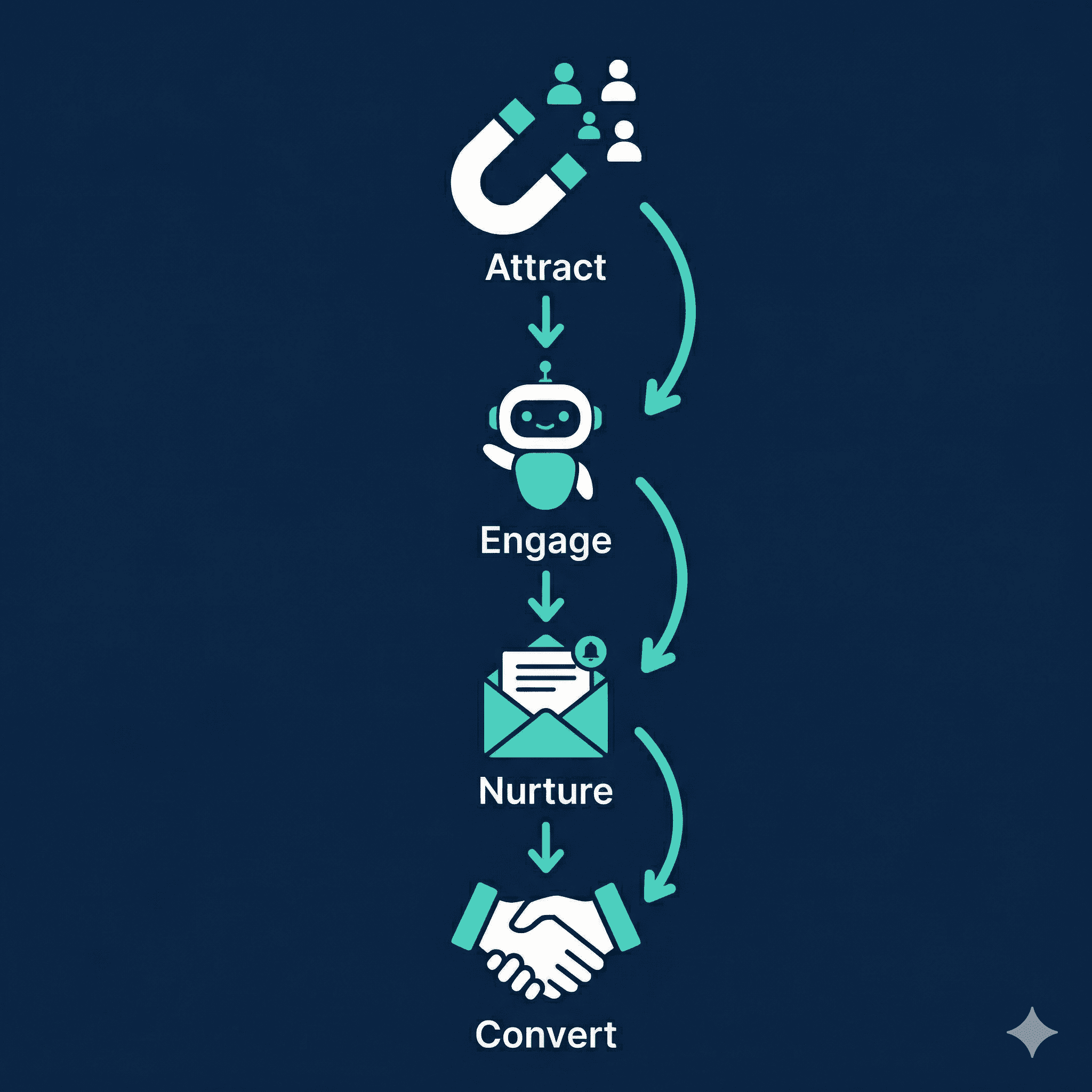
Getting better at finding and converting leads isn’t about hunches anymore,it’s about reading the numbers and acting fast when something doesn’t add up. Small businesses can win big if they use data to cut through the noise and figure out exactly what’s working,or not. Here’s how you put data and AI to work for you, without turning it into an all-consuming project.
Let’s talk about what happens after someone lands on your site. With basic analytics, you can see where traffic comes from, which buttons they’re clicking, and whether they hang around or bounce in seconds. AI analytics tools help you go beyond these basics, picking up patterns and behaviors you might otherwise miss.
A quick-look table shows the difference between basic tracking and AI-powered insight:
Metric | Traditional Analytics | AI Analytics |
Page Views | Yes | Yes |
Click Paths | Manual | Automated Path Analysis |
Campaign Source | Yes | Yes, plus Channel Attribution |
Lead Quality Signals | No | Predictive Scoring & Segmentation |
Next-Best Action | Guesswork | Personalized AI Recommendations |
What’s powerful here is you’re not just seeing what happened. AI actually suggests the next move, based on real results,not “should” but “does.”
Running ads? Writing blog posts? Chasing after every new marketing idea? Measuring ROI tells you which of these is filling your pipeline and which is draining your wallet. AI tools pull all this together in dashboards that piece together ad spend, content engagement, and actual lead conversions.
Here’s a three-step process to keep this simple:
If your CPL creeps up or conversions tank, AI helps pinpoint what’s not working,maybe it’s your landing page, maybe it’s the ad creative, maybe it’s the traffic quality from a certain channel. Quick tip: When the numbers are off, don’t overhaul everything at once. Change one thing,like the call-to-action, the main visual, or email headline,and watch for results before making another move.
Forget guessing what the competition is up to,let AI take a look behind the curtain. Tools in this space track what your competitors are doing: their top-performing content, their ad campaigns, even which offers are converting. Over time, you’ll spot gaps and trends so you’re not just reacting, but planning your next steps.
Here’s what to watch with AI competitor analysis:
By comparing your numbers with theirs, you’ll see where you’re ahead and where you’re missing the mark. By utilizing advanced AI lead generation strategies, small businesses can actually make smarter moves than bigger competitors,just with less guesswork.
Okay, so you're sold on the idea of AI helping you find more leads. That's great! But now comes the big question: which tools should you actually use? It can feel like a jungle out there with so many options. Don't worry, we'll break it down.
When you're starting out, you don't need a super complex setup. Think about the core things you need to do to get leads. For many small businesses, this means:
The goal is to pick tools that solve your biggest lead generation problems right now.
Just buying a tool isn't enough, right? You have to actually use it. Integrating AI into your daily grind might sound complicated, but it doesn't have to be. Start small.
Worried about the cost? You don't need to spend a fortune to get started. Many AI tools offer free trials or have affordable plans for small businesses. For instance, you can find great conversion optimization tools with AI-assisted features like Unbounce and OptinMonster that won't break the bank. Intercom and Calendly are also good choices for quickly qualifying and routing leads without a huge investment. As your business grows, you can then look at more advanced, scalable solutions. The key is to start with what you can afford and what will give you the quickest return on investment. You can always upgrade or add more tools later as your lead generation efforts become more successful and your budget expands.
So, we've talked a lot about how AI can really change the game for small businesses when it comes to finding new customers. It's not about complicated tech stuff anymore; it's about using smart tools to get your message out there in a way that actually helps people. By focusing on what your customers need and using AI to make that process smoother, you can stop chasing leads and start attracting them. It takes a bit of effort to get started, sure, but the payoff in saved time and more sales is totally worth it.
AI-powered lead generation uses smart technology to help small businesses find and attract new customers. Instead of using old methods like cold calls or spam emails, AI tools can help you understand what your customers want and reach out to them in smarter ways, like personalized emails or website chatbots.
Old methods like cold calling or sending out mass flyers interrupt people and usually get ignored. Today, customers do their own research online and only pay attention to businesses that offer helpful information. AI helps you meet customers where they are and give them what they’re looking for.
AI tools can look at your current customers and find patterns, like age, location, or interests. This helps you create a clear picture of who your best customers are, so you can focus your marketing on people most likely to buy from you.
Yes! AI can help you write blog posts, social media updates, and even emails. It can suggest topics, find the best keywords, and make sure your content is easy to find online. This saves you time and helps you attract more leads.
There are many beginner-friendly AI tools. For example, Jasper or ChatGPT can help with writing, while tools like Zapier can automate tasks. Chatbots like ManyChat can answer customer questions right away. Most of these tools are affordable and don’t require special tech skills.
You can track your results with simple dashboards or reports that show how many leads you’re getting, where they come from, and how many turn into customers. AI tools can help you see what’s working and what needs to change, so you can keep improving your results.
Enter your email to receive the latest trade insights, guides, and HS-code explainers from EximAgent Blog.