Economy
Automated Outreach: Effective Techniques for 2026
Apr 17, 2026
Economy
According to the Ministry of Agriculture and Environment, in March 2025, Vietnam exported approximately 200,000 tons of coffee...
April 16, 2025By Davos Pham5 min readView as Markdown
Coffee has long been one of Vietnam’s leading agricultural exports, not only contributing significantly to export turnover but also creating jobs for millions of workers. Today, the coffee industry is undergoing a significant transformation toward value enhancement, particularly through increasing the proportion of deep-processed products rather than focusing solely on raw, low-priced green beans.
According to the Ministry of Agriculture and Environment, in March 2025, Vietnam exported approximately 200,000 tons of coffee with a total value of USD 1.16 billion. In the first three months of 2025, the country exported a total of 509,500 tons, earning USD 2.88 billion. Despite a 12.9% decrease in volume compared to the same period last year, the value surged by 49.5%—a positive result that clearly reflects the impact of prioritizing value over volume.
Notably, the average export price in Q1 2025 reached about USD 5,656 per ton, up 71.7% year-on-year—a substantial increase indicating a shift toward higher-value products.
In 2024, Vietnam was the world’s second-largest coffee exporter after Brazil, accounting for 19% of global market share. The sector contributed USD 5.48 billion to the economy, representing 8.7% of the country’s total agricultural, forestry, and fishery export turnover—just behind wood, fruits and vegetables, and rice.
However, a key weakness remains: most of the coffee exported is still in the form of green beans, which have relatively low value. Specifically, in 2024, 90.4% of exported coffee was unprocessed green beans, while value-added products like roasted and instant coffee—often worth double or more—accounted for just 9.6%.
According to Mr. To Xuan Phuc, an expert from Forest Trends, the increase in the proportion of deep-processed coffee from 8.8% (2022) to 9.6% (2024) is a promising sign that Vietnam’s coffee industry is gradually moving away from raw exports and into higher-value chains. The average FOB price of deep-processed coffee is currently 2.23 times higher than that of green beans, presenting great potential for profit if scaled further.
Vietnamese coffee is now present in over 90 countries. Europe remains the largest importer of green coffee, with key markets including Germany (14%), Italy (10%), Spain, and the Netherlands. The U.S. leads in importing roasted coffee, while Asia is the top market for instant coffee—particularly Japan, the Philippines, China, and Indonesia.
This diverse market structure provides a solid foundation for Vietnamese coffee exporters to leverage trade agreements such as EVFTA, CPTPP, and RCEP to expand market share, reduce tariffs, and improve competitiveness. Deepening access to demanding markets is a key driver for enterprises to improve production processes, product quality, and national brand recognition.
Despite many positive signals, Vietnam’s coffee industry continues to face several major challenges:
To maintain its position and ensure long-term development, the coffee industry must pivot toward sustainability—across production, processing, and branding. Current policies are designed not only to offer direct support but to promote comprehensive changes, from replanting and farmer training to supply chain improvement and trade promotion.
According to Mr. Do Ha Nam, Chairman of the Vietnam Coffee-Cocoa Association, the key solutions for boosting value include:
Mr. To Xuan Phuc also emphasizes that sustainable value enhancement should focus on three pillars:
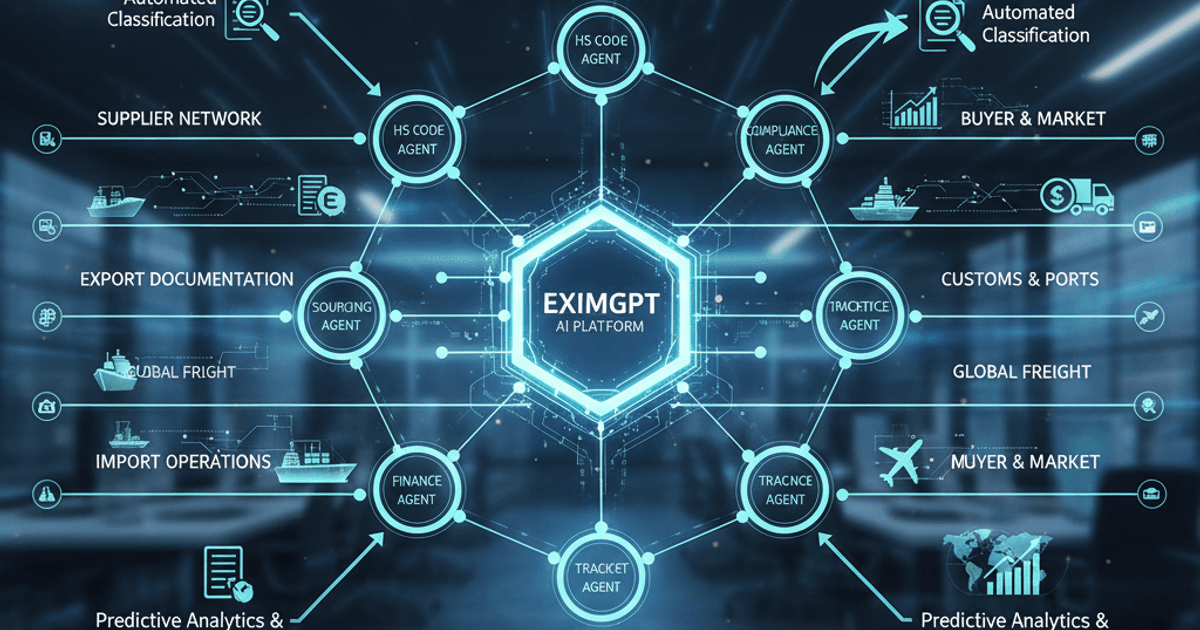
As the coffee industry transitions and seeks higher value, technology is playing an increasingly crucial role—from traceability and supply chain management to marketing and global partner sourcing. This is where EximAgent becomes a strategic ally for Vietnamese agricultural exporters.
With features such as:
EximAgent is more than a tool—it’s a smart partner helping businesses go global faster, more efficiently, and more professionally.
Vietnam’s coffee industry is at a crucial turning point: continue down the path of raw commodity exports, or boldly shift toward sustainability and high value. Increasing the proportion of deep-processed exports is the right move, but it requires a synchronized effort across farmers, businesses, government, and technology.
Here, tools like EximAgent can act as a lever for small and medium-sized enterprises to fully capitalize on trade agreements, shorten the time to reach clients, and enhance export performance.
Digital transformation and deep processing—this is the “power duo” that will help Vietnamese coffee conquer demanding markets and maintain its position on the global export map.
Enter your email to receive the latest trade insights, guides, and HS-code explainers from EximAgent Blog.