Economy
Automated Outreach: Effective Techniques for 2026
Apr 17, 2026
Economy
According to the latest data from the General Department of Customs...
April 18, 2025By Davos Pham3 min readView as Markdown
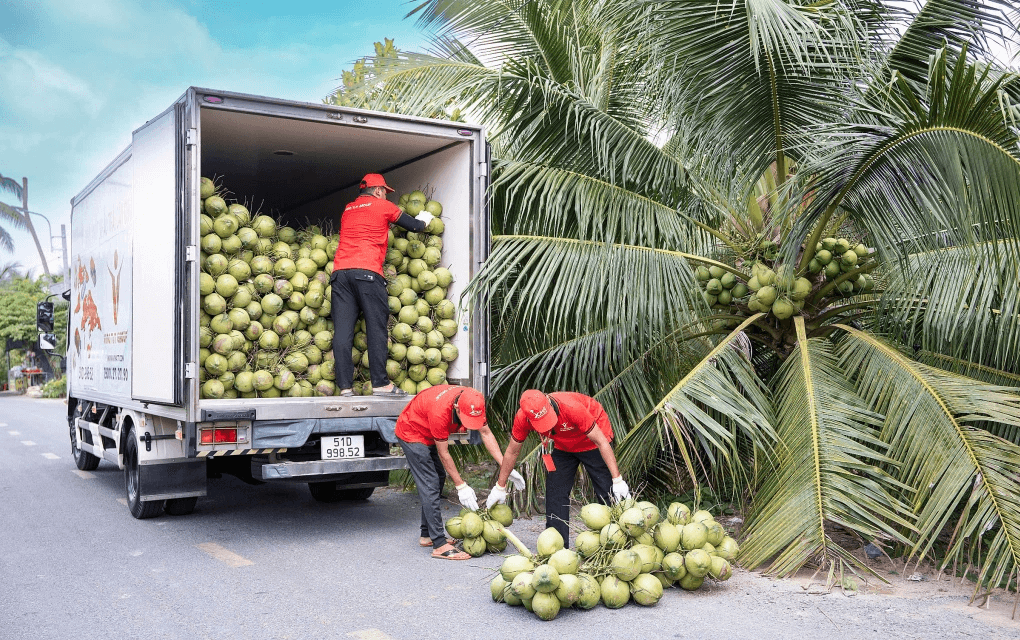
According to the latest data from the General Department of Customs, Q1/2025 recorded a surprising development in fruit and vegetable exports: The US spent $111 million (nearly 2,900 billion VND) to import fruits and vegetables from Vietnam, up 66% compared to the same period last year.
This is a positive signal in the context where Vietnam's total fruit and vegetable export turnover in the first three months of the year only reached $1.16 billion, down 9.2% year-on-year. The main reason is the sharp decline from traditional markets like China, which is now applying more stringent quarantine policies.
In an overall picture with many fluctuations, the US emerges as a potential and stable market for Vietnam's agricultural sector, especially as consumers there increasingly appreciate the quality and reputation of Vietnamese agricultural products.
While exports to China – Vietnam's largest market for fruits and vegetables – only reached over $521 million and decreased by 27.4% compared to the same period, the US shows an opposite trend.
China is currently tightening quarantine, especially for items such as durian, applying new regulations like the "Yellow O" inspection. Along with that, increased logistics and transportation costs have disrupted many orders, affecting the entire supply chain.
In contrast, the US market recorded rapid growth rates, not only due to increased demand but also because of the high appreciation for Vietnamese agricultural products' quality. American consumers, according to experts, are increasingly prioritizing products with clear origin, food safety assurance, and distinct ecological indicators.
According to Mr. Dang Phuc Nguyen – General Secretary of the Vietnam Fruit and Vegetable Association – one of the main reasons helping Vietnamese fruits and vegetables grow strongly in the US is the improvement in quality and brand image.
Specifically, Vietnamese businesses have begun to focus more on traceability processes, pesticide residue control, and GlobalG.A.P. standards, helping agricultural products better meet requirements from demanding markets like the US and EU.
In addition, the clean eating – green living trend in the US is booming, making items like fresh coconut, dragon fruit, pomelo, passion fruit, etc. increasingly popular.
Although the US has just announced a plan to impose high countervailing duties of up to 46% on many imported items, Vietnamese fruits and vegetables are likely to remain unaffected, at least in the short term ahead.
This is because the US still has an agricultural trade deficit with Vietnam. In 2024, the US imported $360 million worth of fruits and vegetables from Vietnam but exported back $540 million. In Q1/2025 alone, the import turnover of fruits and vegetables from the US to Vietnam was $160 million. This creates a relative balance and helps Vietnamese produce avoid unfavorable policy shocks.
Despite many positive signals, Vietnam's fruit and vegetable industry is still facing a major challenge: the low rate of deep processing.
Many experts warn that without increasing the proportion of processed products, Vietnam will find it difficult to maintain growth momentum in high-standard markets like the EU, US, and South Korea – where demand for processed food is always high, due to consumer market characteristics.
The export of fresh agricultural products still accounts for a large proportion, posing many risks such as spoilage, high preservation costs, and dependence on weather – a factor that is very difficult to control. Additionally, fresh products typically have low added value, making it difficult for businesses to optimize profits.
Enter your email to receive the latest trade insights, guides, and HS-code explainers from EximAgent Blog.